Alcoholic Fermentation:
Making Grapes Into Wine
The basic formula of Alcoholic Fermentation is:
Sugar + Yeast = Alcohol + CO 2
Yes those delicious grapes that you see on the vines can easily be transformed into wine by the process of
It is not an easy process however. In the case of making a great wine, several factors influence the overall success.
Wine Making Techniques
Yeast fermentation - although yeast is present
naturally on the grape skin, a whitish covering called bloom, it is not
always used in today's wine making fermentation process. Cultured
yeast, commonly called wine yeast is manufactured and
added for specific types of alcoholic fermentation. This allows the
winemaker customization and uniqueness to their style of wine.
Sugar content
- All grapes contain the natural sugars, fructose and glucose. The
higher the sugar content of the grape, the higher the potential final
alcohol content. In wine making, the most important parts of the grape
are the skin and pulp. They contain the building blocks of the wine
which is the sugar, acids and
tannins.
Temperature - transformation of the sugar by yeast
to create alcohol occurs at a temperature between 50 degrees Fahrenheit
and 90 degrees Fahrenheit. Below 50 degrees, wine making fermentation
cannot begin and above 100 degrees the yeast are killed off.
Duration of time
- depending on the type of grape and ultimately the type of wine that
is being made, the duration for fermentation will vary. Some wines go
through a second fermentation called malolactic fermentation. This is done to add flavor and complexity to the final wine.
Alcohol
- if grapes are picked at their perfect ripeness then the desired level
of alcohol can be reached. In wine, alcoholic strength varies from
8-9% in very light wines to 19-24% in some
dessert wines.
Aging - What are the options that winemakers need to consider when
aging
their red wine. Well, one of the most important is where will the aging of the wine take place.
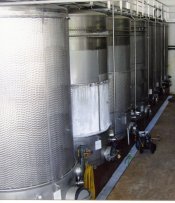
There are two basic methods of red wine aging and they are fermentation in stainless steel tanks or oak barrels.


